Horacio Parisotto

Lead Engineer, Search & Discovery @ Tur.com

Sr Full-Stack & AI Engineer

GitHub: public repositories with tested code samples (opens in a new tab)

Lead Engineer, Search & Discovery @ Tur.comSenior Full-Stack & AI Engineer · 6+ years in production: AI search that lifted search clicks 26%, site-wide add-to-carts up 24%, a Firebase bill cut 99.7%, AI agents, RAG and vector search. and a Firebase bill cut 99.7%.

LLMRAGAI AgentsMCPTech SpecsLangChainLangGraphClaudeOpenAIGeminiVector SearchAI VisionTypeScriptReactReact NativeNext.jsNode.jsGoPythonPostgreSQLMongoDBElasticsearchAmplitudeNew RelicSentryRedisFirebaseDockerTerraformAWSGCPFFmpeg
Production MarketplaceChileVisit site

Tur: Hybrid Search, Payments & Go CMS

Tur is a travel marketplace for tours and experiences with 900K monthly users (Amplitude). I lead Search & Discovery and built core features on its Go backend (PostgreSQL, MongoDB, AWS).

Hybrid search: I designed a search that fuses keyword and vector search on Elasticsearch with OpenAI embeddings, so exact matches stay on top and natural phrases still find the right tours. It's live in production and powers the search bar end to end (autocomplete and default ranking on web, iOS and Android). Over the 28 days after launch, compared with the week before, Amplitude shows +26% clicks per search and searches with no results down from 15% to 2.9%. Site-wide add-to-carts also rose 24% over the same period, alongside other changes. On real searches replayed against production, the share of cases where the first result is relevant went up from 72% to 86%.

Go CMS: I replaced a developer-dependent workflow with a custom Go CMS. Marketing now controls heroes, countdowns and promos on 45 landing pages across 10 countries, with zero engineering time per campaign.

Payments & financing: I built configurable installment tiers across 10 currencies and 10 countries, from the backoffice through checkout, so the product team manages financing terms independently for each market.

Team: 20+ engineers across the company
Role: Lead Engineer, Search & Discovery
Scope: End-to-end ownership of Search & Discovery: technical direction, roadmap priorities and execution. Working cross-functionally with Product, Design and Data, with the ability to grow the engineering team as the roadmap expands.
My part: Designed the hybrid search architecture and lead its ongoing evolution. Shipped the Go CMS and the installment tiers in coordination with the mobile and product teams: 100+ pull requests across 6 repositories, always backward-compatible. Live in Chile, Argentina, Peru, Colombia, Brazil, the United States, Costa Rica, Mexico, Uruguay and Bolivia.
Key decision: Fused lexical and semantic search: exact matches stay on top, natural phrases still find the right tours
APIs & integrations: A Go API powering hybrid search, landing pages, installment tiers and blog translation, with role-based access and an audit trail for backoffice changes. Releases go API-first across repositories, always backward-compatible, with additive, idempotent migrations. Connected: Elasticsearch (lexical and vector fusion), OpenAI embeddings (2-second timeout, 7-day Redis cache, lexical fallback), PostgreSQL, Redis, Amplitude (search-to-payment attribution in the app through a search id).
Technical spec documented: scope, architecture, key decisions and acceptance criteria.
15% → 2.9% no results+26% clicks/search72% → 86% top result0.59 → 0.82 nDCG prod45 landing pages10 payment currenciesGoVector SearchElasticsearchOpenAI EmbeddingsPostgreSQLRedisPayments

Inside: Go CMS & Landing Redesign · Hybrid Search · Leading Search & Discovery · Payments & Financing · Performance · Root-Cause Fixes

GitHub35 pages19 min read

Hiring? The case study is available to hiring teams on request. It covers my work, not the client's business data.
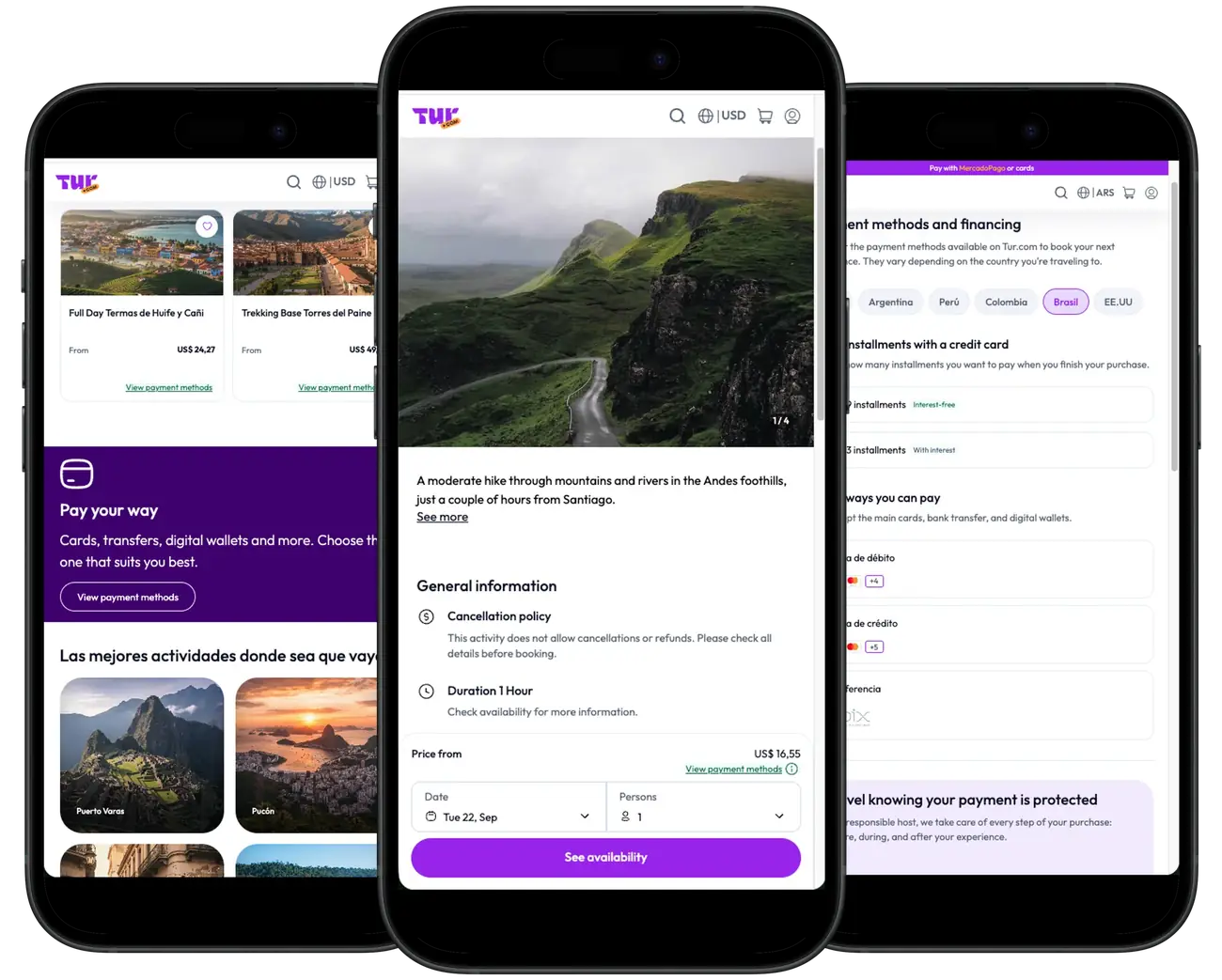
Tur.com on three phones: activity feed, a tour page and payment methods
Production SaaSCanadaVisit site

Harristime: Arena Scheduling & Digital Signage

Harristime is a scheduling system for sports arenas: it books the facilities and drives the digital signage and equipment on site.

The rescue: after building venues on the client's legacy system, I traced a runaway Firebase bill to queries loading the entire database history and cut it from $28K to $78 a year.

The rebuild: that fix earned a much bigger mandate, rebuilding the platform from scratch as a multi-venue system. It now drives live digital signage on 30+ screens across 17 facilities for 10 client organizations, including municipalities, across Canada. I migrated incrementally with zero downtime: legacy screens stayed live alongside the new system, and the client has since expanded to Whitby's four arenas and more.

Collaboration: Directly with the CEO
My part: the whole platform, end to end: the rescue, the rebuild, a Gemini scheduling assistant that turns plain-language requests into validated bookings, automated schedule sync from league websites, the ESP32 horn controller and the deployment on Google Cloud Run with Terraform. 481 commits, 175 tests gating CI.
Key decision: Rebuilt incrementally: legacy screens stayed live throughout
APIs & integrations: Firebase (Firestore, Auth, Realtime Database, Storage) plus Python Cloud Functions behind token-verified HTTP endpoints. Connected: Gemini (scheduling assistant), league websites (scraper), Resend (email), an ESP32 horn controller.
Technical spec documented: scope, architecture, key decisions and acceptance criteria.
−99.7% Firebase bill$28K → $78/yr 37k+ events scheduled30+ display screens17 facilities600+ teams scheduled175 tests in <1sReactTypeScriptPythonFirebaseLLM (Gemini)IoT (ESP32)TerraformCloud Run

Inside: The Rescue · The Rebuild · In Production

GitHub27 pages15 min read

Hiring? The case study is available to hiring teams on request. It covers my work, not the client's business data.
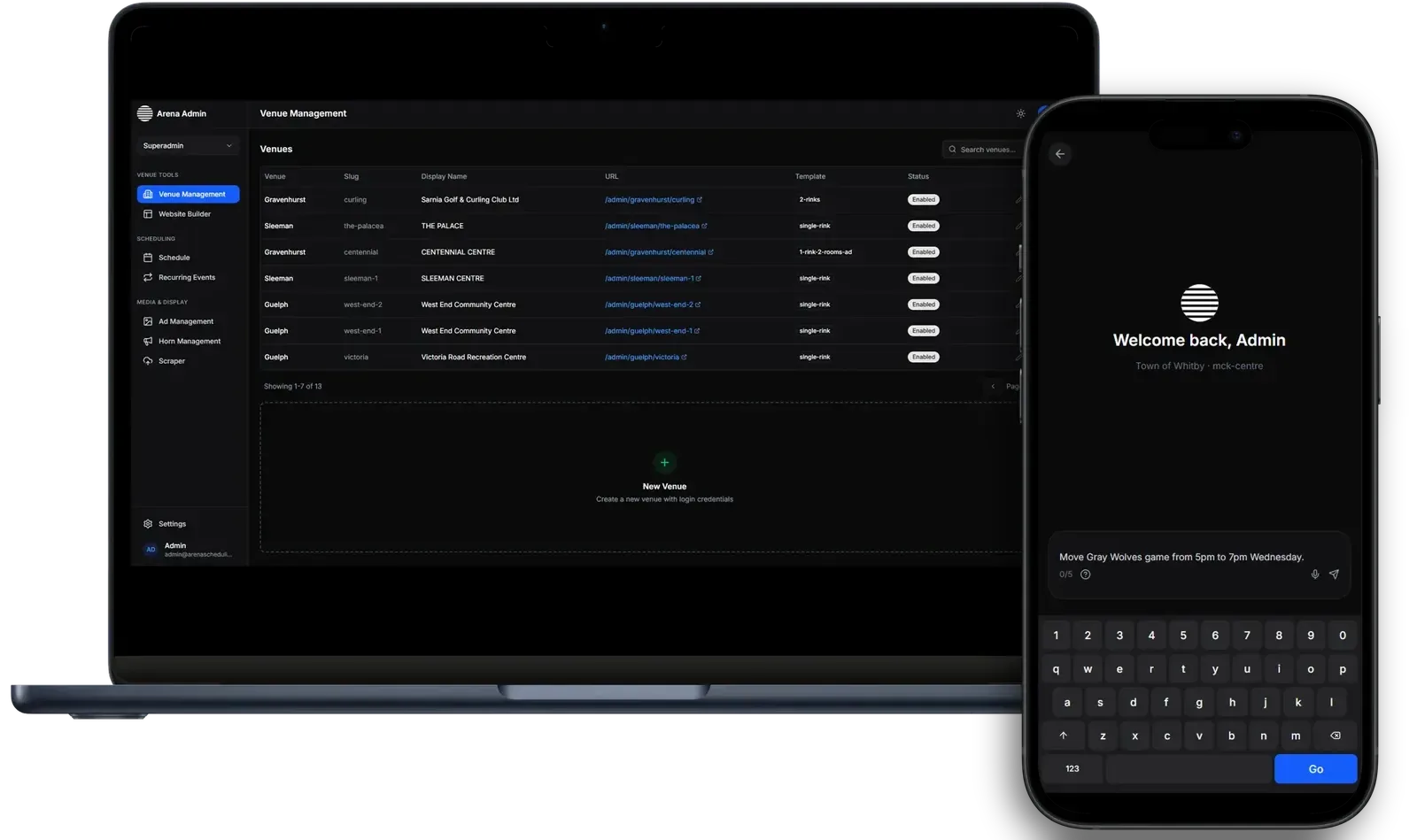
Harristime multi-venue dashboard and the Scheda scheduling assistant on a phone
Production AI AgentUnited StatesVisit site

StackFactor: SDLC Compliance Remediation Agent

I designed the remediation agent with StackFactor's CTO and built it to connect SHIELD, its SDLC-compliance product, with EXCEED, its talent-intelligence platform. When a SHIELD deployment gate blocks a non-compliant release, the agent turns the incident into an assigned EXCEED training plan the same day, acting only through narrow MCP tools under the identity of whoever triggered it.

Collaboration: Directly with the CTO
Before: someone had to read each incident and write the training by hand, so the lesson rarely reached the people who needed it.
The loop: SHIELD blocks a release → incident → my agent → assigned EXCEED training plan
My part: the remediation agent end to end, plus the incident layer under it, the intake that feeds it and the review screens. SHIELD and EXCEED are StackFactor's product.
Key decision: The remediation agent holds no credentials of its own: it acts under the identity of whoever triggered it
APIs & integrations: Four narrow MCP tools, no direct database access and no standing credentials. Connected: SHIELD (compliance gates) with EXCEED (training plans), over an async intake queue, on MongoDB.
Same-day remediation0 standing credentials4 MCP tools3 autonomy levels3 → 1 incident intake pathsAI AgentsMCPTypeScriptMongoDBSDLC CompliancePolicy-as-codeDeployment gatesSOC 2 · SOX

Inside: The Problem · The Agent · Safety Guarantees · The Platform Underneath

GitHub21 pages11 min read

Hiring? The case study is available to hiring teams on request. It covers my work, not the client's business data.
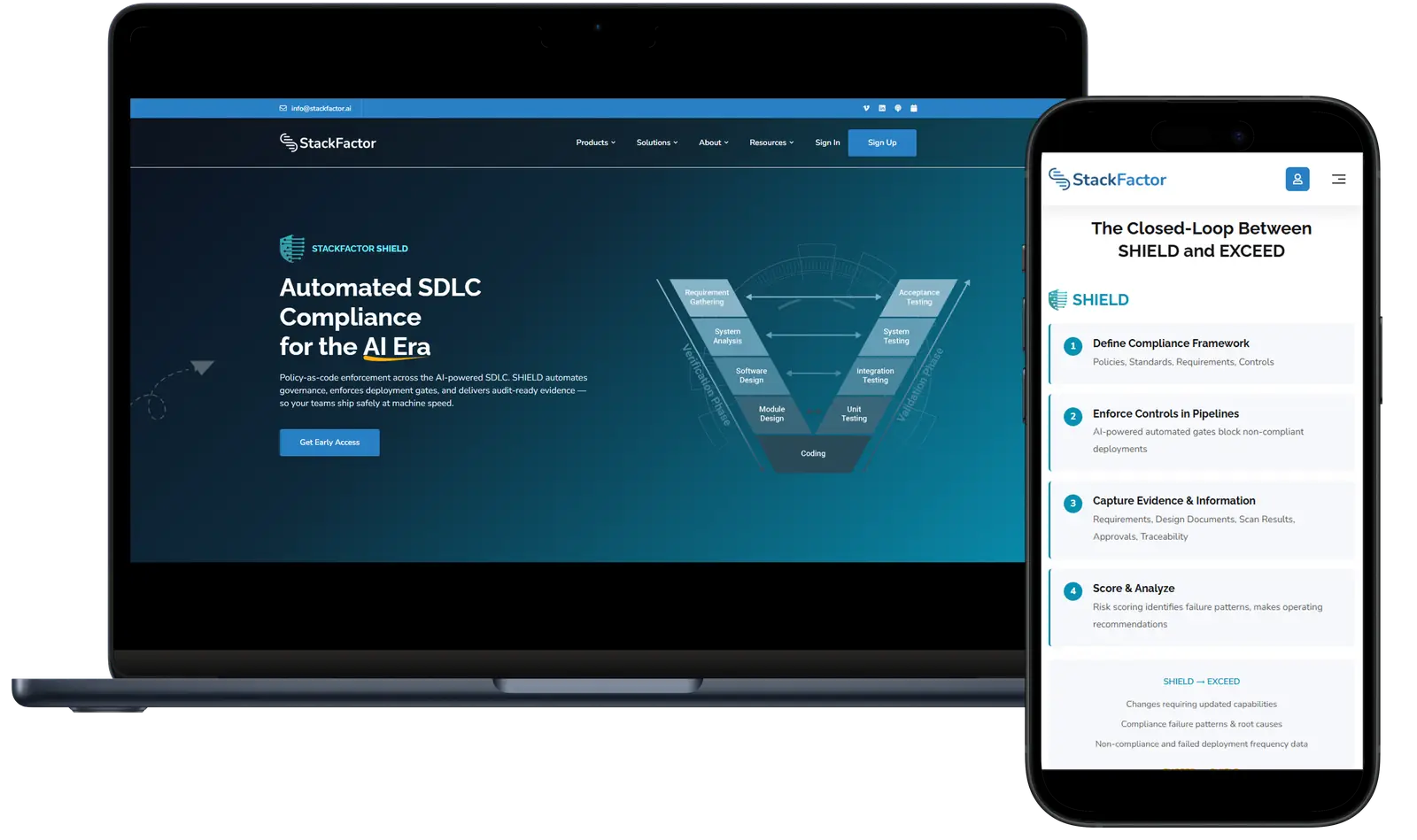
StackFactor SHIELD website on a laptop and its SHIELD and EXCEED closed loop on a phone
Founder · Production AI PlatformArgentinaVisit site

OurBlock: AI-Powered Security Platform

24/7 AI camera-security platform for residential, commercial and rural properties, built end-to-end as solo founder and live in production on a rural property, with every module running. Every motion event lights up the guard cabin within a second; FFmpeg pulls the frame from the camera's RTSP stream, a vision model separates real threats from false positives, describes each event in one sentence spoken through ElevenLabs and escalates people or vehicles to a critical alert, while a RAG search and a tool-calling agent answer natural-language investigations over the event log. It all runs on a Node.js backend on a single mini PC on site, with no database server.

Role: Solo founder
Key decision: A vision model checks every motion event: false alarms stay quiet, and real threats are spoken to the guard in one sentence
APIs & integrations: A REST API with JWT, a live event stream and per-user daily limits on paid endpoints. Connected: Camera streams (RTSP and ISAPI), Claude and Gemini vision, OpenAI embeddings and voice, WhatsApp (Twilio), Resend, a smart bulb, cloud storage.
Technical spec documented: scope, architecture, key decisions and acceptance criteria.
−94% AI cost/frame94 tests, 100% pass4 AI providers39 API endpoints10 integrations24/7 monitoring1 live pilot3-level TTS fallback<1 s to the guard cabinAI AgentsRAGVector SearchComputer VisionClaudeGemini

Inside: The Product · The AI · Video & Infrastructure · From Simulator to the Field · In the Field

GitHub31 pages17 min read

Kept private because it's a live security system protecting a real property. Hiring?

OurBlock website on a laptop and a phone
Production AutomationArgentinaVisit site

Starlead: Automated Meta Ads Reports

Starlead is a back office I built for a digital marketing agency that was writing its clients' Meta Ads results by hand. Twice a week it pulls each client's campaign numbers from the Meta Marketing API, writes the report and emails it automatically: Mondays for the last 15 days, Fridays for the last 7, with the four metrics the agency asked for (results, cost per result, impressions and frequency).

Built for failure first: an email to a paying client can't be wrong or go out twice. Every figure was checked against Ads Manager to the cent, sends are idempotent with capped retries, access is read-only and least-privilege, and a dead-man's switch alerts me when a scheduled report doesn't go out. When GitHub's scheduler fired hours late I added an external clock; when the mailbox rejected a login during a scheduled send, the alert fired and I fixed the cause.

Costs $0 to run: no servers to pay for. A static app on Vercel, Firestore on Firebase's free plan, the scheduler on GitHub Actions and monitoring on free tiers. Reading only three days of history, avoiding Cloud Functions and capping sends keep operating costs at $0/month as the client list grows.

Status: in production at starlead.app, sending 72 reports a week (140+ emails) to 36 of the agency's clients, across lead, WhatsApp and purchase campaigns, with nobody sending anything by hand.

Collaboration: Working directly with the CEO
My part: Designed the architecture (a pure sending engine, Firebase, serverless functions and a scheduled runner behind an external clock), scoped it with the CEO, then built, tested and ran it in production, end to end. I chose read-only Meta access and added a recipient allowlist for safe rollout; 380+ automated tests run on every push.
Key decision: Treated every client email like a payment: idempotent, reserved before it is sent, checked against the source of truth and monitored for silence
APIs & integrations: Idempotent sends, a retry endpoint that reserves before it sends, and tokens verified on the server. Connected: Meta Marketing API (read-only), Firebase Auth and Firestore, SMTP, GitHub Actions, Healthchecks.
Technical spec documented: scope, architecture, key decisions and acceptance criteria.
36 clients served72 reports a week3 campaign types$0/month infrastructureto the cent vs Ads Manager380+ automated testsTypeScriptReactMeta Marketing APIFirebaseGitHub ActionsObservabilityVercel

Inside: The Problem · Trusting the Numbers · The Engine · Never Twice, Never Silent · Costing $0 · Running It

GitHub21 pages11 min read

Hiring? The case study is available to hiring teams on request. It covers my work, not the client's business data.
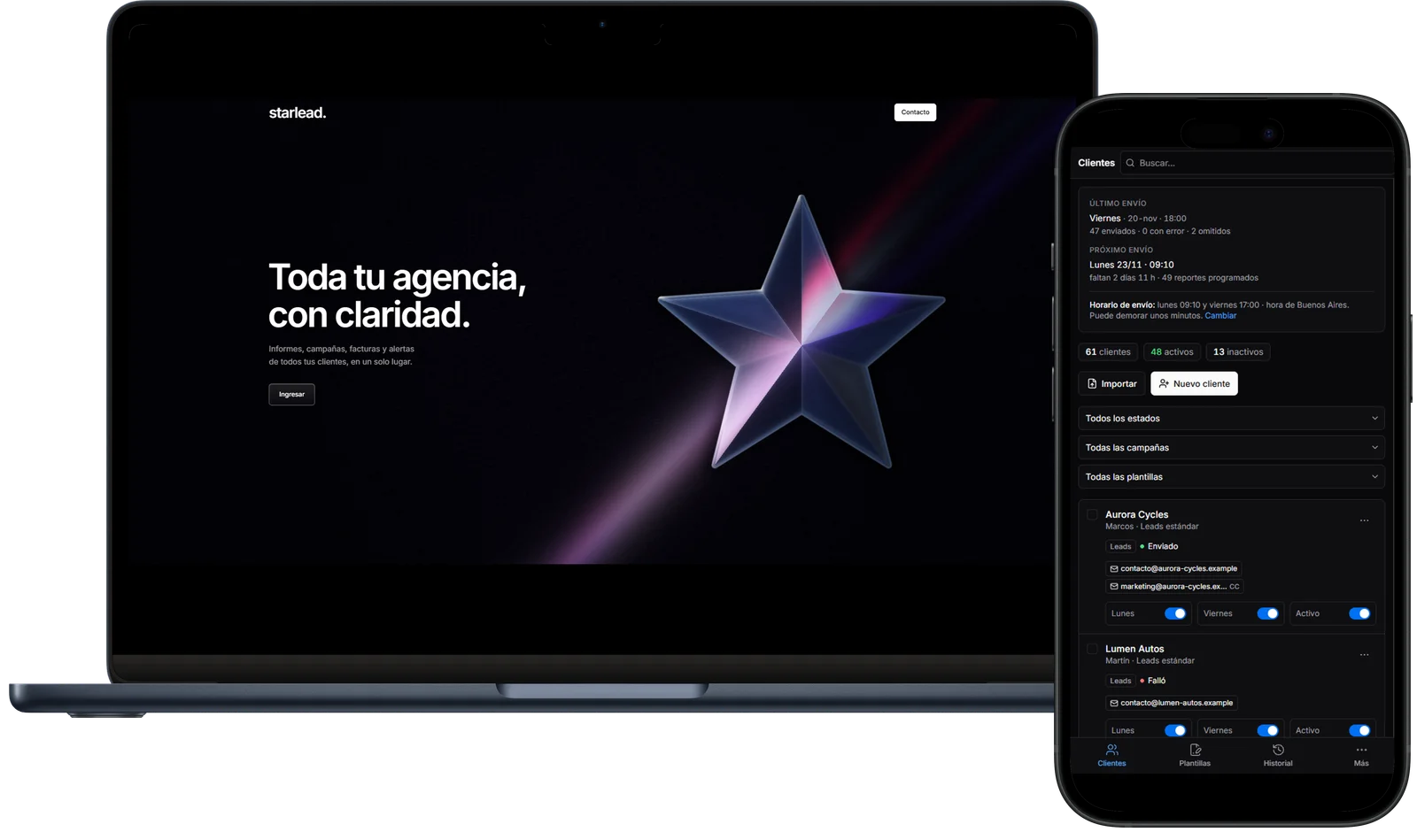
Starlead landing page on a laptop and the clients dashboard on a phone

Weekly reports go to 36 agency clients, including these brands

Production AI Agent · Engineering EnablementConfidential clientLATAM

Automated Code Review Agent

For a client that asked to remain confidential, I turned the team's unwritten review standards into an explicit knowledge base by mining 750+ PR comments across 1,300+ pull requests, then encoded it into a self-gating Claude Code skill that reviews real, open PRs from the team and cross-references sibling code for repeated bugs. On live reviews, the skill does the breadth and I trace what it surfaces down to the root cause.

Team: Engineering team across multiple repositories
Key decision: The agent never auto-posts: I verify what it surfaces
APIs & integrations: Reads pull requests through the GitHub CLI, checks them against conventions mined from 750+ review comments, and writes to GitHub only after explicit confirmation. Connected: GitHub (pull requests and code search) and Claude Code.
Engineering standards encoded as executable rules: 29 conventions mined from the team's own review history and enforced by a Claude Code skill.
750+ PR comments1,300+ PRs mined4 repos29 conventions0 auto-postsCode ReviewTechnical LeadershipAI AgentsClaude CodeEngineering StandardsSafety ConstraintsRoot-Cause Analysis

Inside: Mining Team Conventions · The Review Agent · Safety Constraints · Real PR Reviews · A Live Review

GitHub11 pages8 min read

Hiring? The case study is available to hiring teams on request. It covers my work, not the client's business data, and the client stays anonymous.

Startup MarketplaceArgentinaRead on Forbes

Lit: A Curated Influencer Marketplace

Lead engineer behind Lit, a curated influencer marketplace featured by Forbes. Think Airbnb, but brands list events instead of apartments: creators apply, brands approve them by their audience metrics, a chat opens with the campaign brief, the app validates each creator's QR code at the door, and brands approve the content posted afterwards. I took an unfinished draft from an outside team and built the product end to end, through its launch on Google Play and the App Store, with Mercado Pago plans, a Next.js admin panel for curation and the marketing website.

Leadership: Led product and 3 developers · Planned the work, reviewed code and owned architecture · Reported directly to the CEO
APIs & integrations: A service layer of 24 services over Firestore, and one-tap rating links handled by the admin panel. Connected: Firebase (Auth, Firestore, Storage, Functions), Mercado Pago, Resend, Google and Facebook sign-in, both app stores.
Technical spec documented: scope, architecture, key decisions and acceptance criteria.
2 app storesForbes feature49 app screens3 user types9 collaboration states36 client QA items24 app services16 data models4 repositoriesReact NativeiOS & AndroidTypeScriptFirebaseNext.jsMercado Pago

Inside: The Takeover · The Marketplace · Running the Business · Launch

GitHub16 pages9 min read

Hiring? The case study is available to hiring teams on request. It covers my work, not the client's business data.

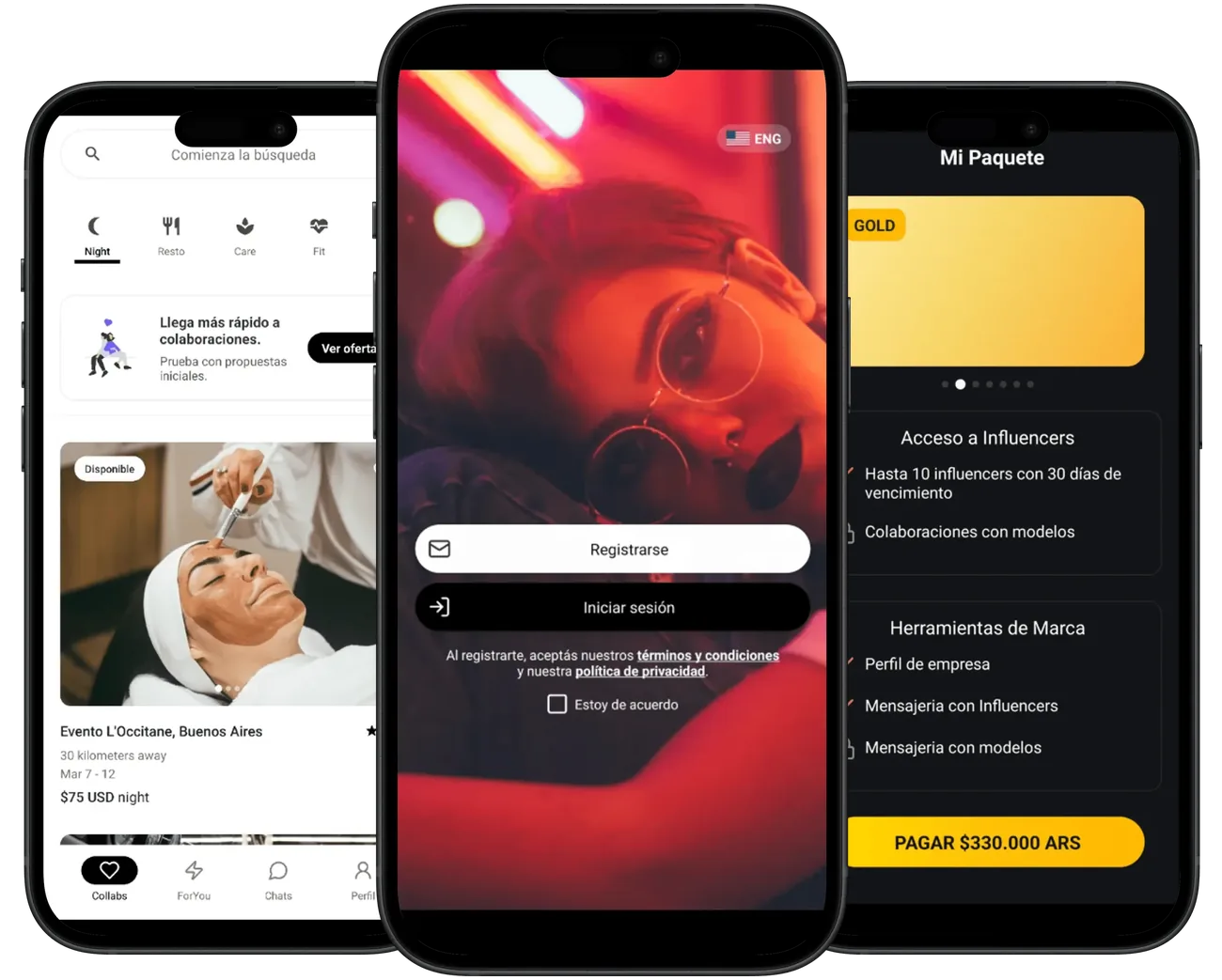
Lit app screens: sign-up, creator profile, offers feed and Gold plan

From a 20+ engineer team to leading 3 developers to working directly with CEOs and CTOs

Lead Engineer, Search & Discovery at a marketplace with 900K monthly users · A Firebase bill cut from $28K to $78 a year

Available for Senior / Lead Full-Stack, Search & AI roles · Remote (UTC−3, overlap with US and Canada hours) · Contract (B2B) or employee

Based in Buenos Aires, Argentina · Working with clients in the US, Canada & Chile · English & Spanish

Available for Senior / Lead Full-Stack, Search & AI rolesRemote, UTC−3 · Contract (B2B) or employeeBuenos Aires, Argentina · Clients in the US, Canada & Chile · English & Spanish